

Two Sandhills Cranes.
Moral Excellence
unforgiven – The Homebound Symphony
…Isaac with his indifference to any moral excellence he himself does not care to practice…How much of our self-righteous conflict emerges from the result that we each, being limited, fight our moral battles on particular fields, and when we find others who have left our chosen fields to fight in others, deny them moral excellence?
Our moral rubrics are always weighted toward our passions.
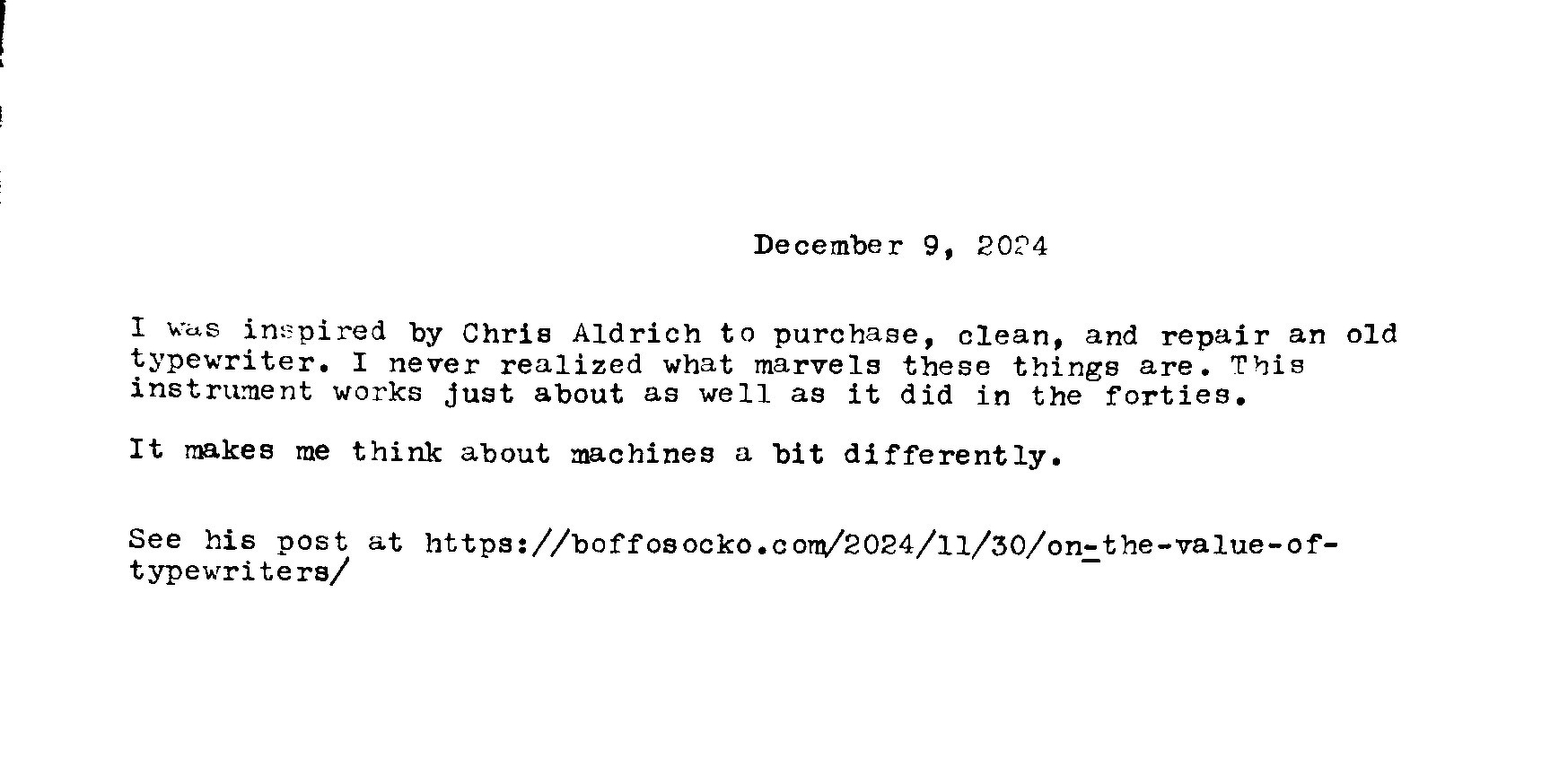
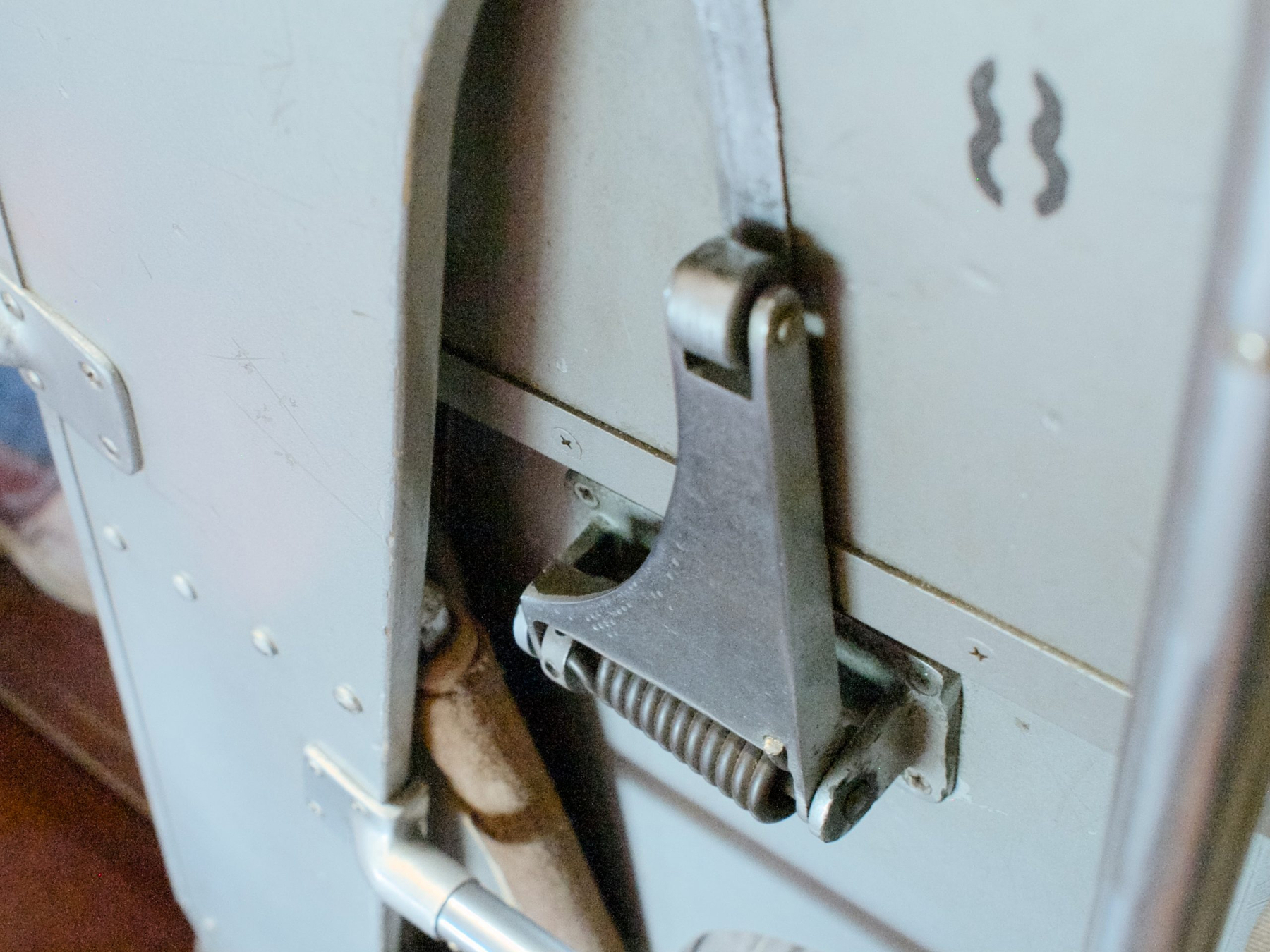
New Old Typewriter
I was inspired by Chris Aldrich’s post to purchase, clean, and repair an old typewriter. I never realized what marvels these things are. This instrument works just about as well as it did in the forties.

It makes me think about machines a bit differently.
A lot of people are fleeing from Twitter/X looking for the next place where ‘everybody is.’ But consider that the scale required for a place where everybody is might be the whole problem. Or at least attract the worst of social network health.
Last night at a middle school band concert, the director announced a student would play “a little ditty” but all the kids heard “play a little Diddy” and they all went nuts.
Stories about reality
Because Large Language Models are trained on human language about reality, their chatbots can often sound like they are in touch with reality. Sometimes they give remarkably lucid responses about things in the world that we would all agree with. But that can hide the fact that these models have no basis in reality whatsoever…only in the recorded interpretations of reality available to them.
Humans are meaning making machines. We are constantly interpreting the randomness of the world as stories which more or less work, but may also not be objectively true. This is why the events of the world continue to surprise us, or cause us anguish when they do not fit into our stories.
Chatbots don’t do that because they don’t know reality, just our stories about reality.
It would be like asking someone about the ocean who has read many books about the ocean, but has never actually experienced the ocean. You could learn a lot, but you’d always be a layer or two (philosophers can argue about this) removed from reality. And I think that makes a difference.
Brooding: Should Our Children Have a Political Party?
Most of us have loved ones whose beliefs don’t perfectly align with ours, and kids need help making sense of that beyond a binary of right and wrong. Our biases are often simultaneously irrational and grounded in experience. Understanding this is not moral relativism, it’s social intelligence. Belonging to a group feels good, but teaching your kids how to identify group dynamics can feel good too.This was from before the election, but will continue to be relevant.
Finished reading: Martin Heidegger by George Steiner 📚